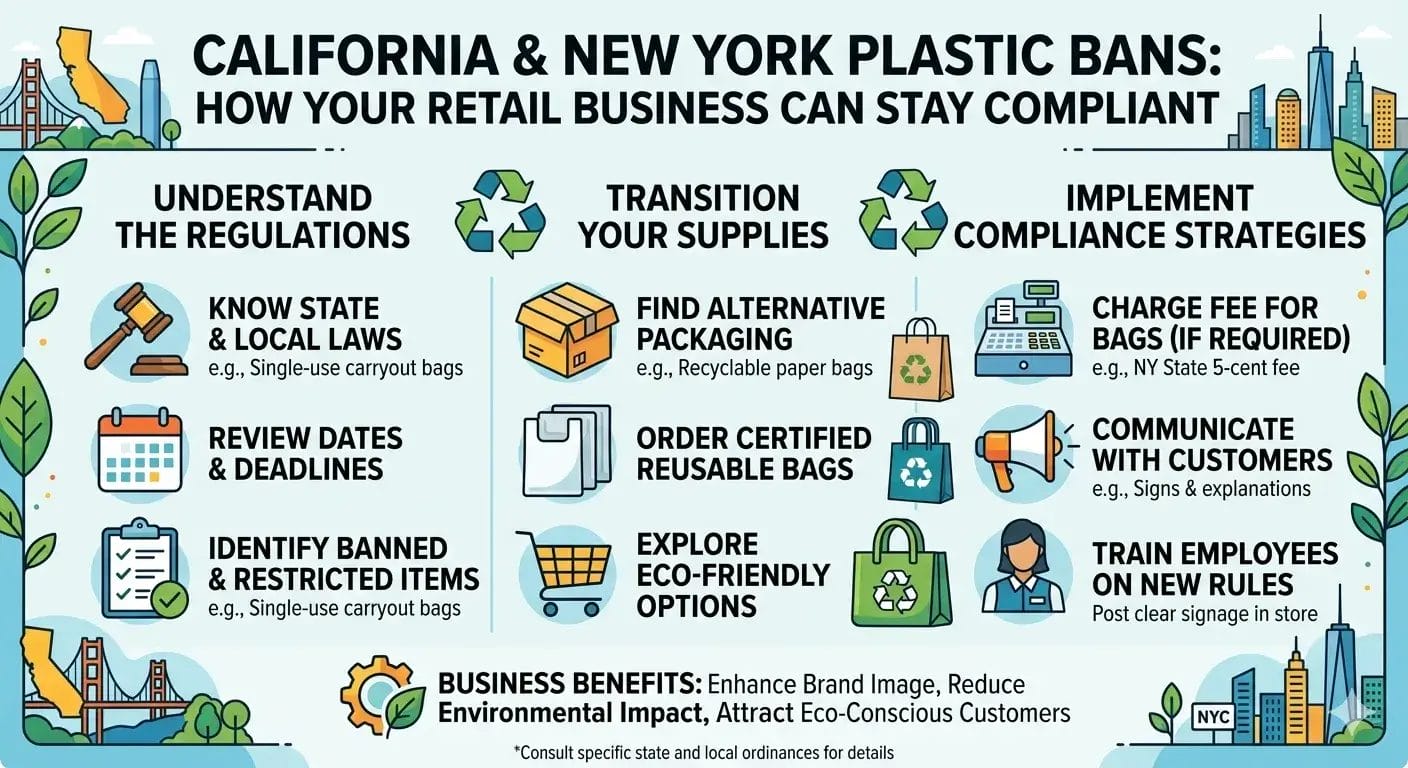
The retail landscape in 2026 is no longer defined by the simple transaction of goods for currency. It is now defined by the footprint of the container that carries those goods. For decades, the “convenience economy” relied on the invisible efficiency of single-use plastics. From the checkout bags at grocery stores to the polystyrene coolers in hardware aisles, plastic was the default because it was cheap, lightweight, and durable. However, the environmental bill for this efficiency has arrived in the form of sweeping legislative mandates. As of January 1, 2026, retail businesses operating in the economic powerhouses of California and New York are facing a “regulatory cliff” that demands a complete overhaul of procurement, logistics, and brand communication.
For the professional retailer, staying compliant is no longer just about avoiding a fine; it is about protecting the viability of the brand in a market where 82% of consumers demand improved packaging sustainability. The arrival of California’s SB 54 and New York’s expanded environmental conservation laws represents a fundamental shift from voluntary “green” initiatives to mandatory, enforceable circularity. This report serves as a comprehensive guide for retail leaders to navigate these changes, leveraging the expertise and product innovations of Pangea Internationals (https://www.pangeainternationals.com/) to transition from a plastic-dependent model to a compliant, future-proof operation.
The Dawn of Mandatory Circularity: Why 2026 is the Turning Point
The transition beginning in 2026 is the result of a decades-long failure of the traditional recycling model. Despite the ubiquity of the “chasing arrows” symbol, only about 9% of plastic waste is successfully recycled globally. The rest enters landfills or persists as microplastic pollution, impacting livestock, marine life, and human health. In response, states like California and New York have moved beyond simple bans to implement Extended Producer Responsibility (EPR) frameworks. These laws shift the financial and operational burden of waste management from the taxpayer to the producer—the very businesses that put the packaging into the market.
Retailers are now caught between the hammer of strict government enforcement and the anvil of shifting consumer expectations. Data suggests that 55% of shoppers have abandoned brands specifically because of non-recyclable packaging. Furthermore, 68% of Americans have already changed their shopping habits to reduce plastic waste. This means that compliance is not just a legal hurdle; it is a competitive necessity. Businesses that fail to adapt risk not only fines of up to $50,000 per day but also a permanent loss of customer loyalty.
The California “Regulatory Cliff”: Understanding SB 54
California’s Senate Bill 54, known as the Plastic Pollution Prevention and Packaging Producer Responsibility Act, is perhaps the most ambitious piece of environmental legislation in U.S. history. It does not just ban specific items; it mandates a total transformation of the packaging supply chain. The law covers all “covered materials,” which include single-use plastic packaging and single-use plastic food-service ware.
The Three Pillars of SB 54 Compliance
To achieve a circular economy by 2032, California has established three non-negotiable targets that begin their implementation phase in 2026. These targets affect every retailer importing or selling products in the state.
| Statutory Goal | Requirement by 2032 | 2026-2028 Milestones |
| Recyclability/Compostability | 100% of all packaging must be recyclable or compostable | All materials must be evaluated against the Covered Material Category (CMC) list |
| Source Reduction | 25% reduction in plastic packaging by weight and component | Producers must begin reporting baseline data to the PRO |
| Recycling Rates | 65% of all single-use plastic packaging must be recycled | 30% recycling rate must be achieved by 2028 |
These goals are backed by the Circular Action Alliance (CAA), the designated Producer Responsibility Organization (PRO) for California. Retailers must realize that the 2032 deadline is the finish line, not the starting blocks. By 2027, the first comprehensive compliance reports are due, and by 2028, the first recycling rate targets must be met.
The Mechanics of the Producer Responsibility Organization (PRO)
The PRO is a producer-run body overseen by CalRecycle. Its primary role is to manage the collection of fees and the investment in recycling infrastructure. Every producer—defined as the brand owner or importer—must join the PRO unless they qualify for a highly specific (and difficult to obtain) individual compliance plan.
The PRO will remit $500 million annually to the state, totaling $5 billion over ten years, starting in 2027. These funds will be used to mitigate the impacts of plastic pollution, particularly in low-income and rural communities that have historically borne the brunt of waste mismanagement. For a retail business, the fee you pay to the PRO will be “eco-modulated,” meaning you will pay less if your packaging is easy to recycle and more if it uses problematic materials like multi-layer films or expanded polystyrene.
Closing the Loophole: The 2026 California Bag Ban (SB 1053)
One of the most immediate shocks to the California retail system in 2026 is the implementation of Senate Bill 1053. This law addresses what regulators have called the “failure” of the original 2014 bag ban. Under the old law, retailers could provide thicker plastic bags (at least 2.25 mil) if they charged a 10-cent fee, labeling them as “reusable”. However, data from CalRecycle’s 2021 waste characterization study showed that Californians were throwing away more plastic bags than ever because these thicker bags were rarely reused and almost never recycled.
The End of Plastic Checkout Bags
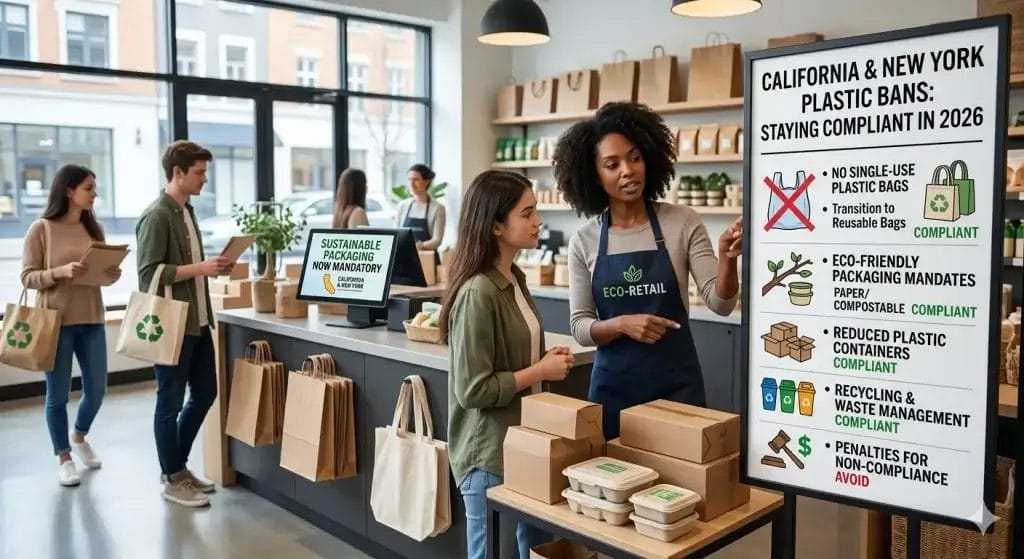
Starting January 1, 2026, all plastic film carryout bags—regardless of their thickness—are prohibited at checkouts in grocery stores, pharmacies, liquor stores, and convenience stores. This is a “strict” ban, meaning that even bags labeled as “recyclable” or “compostable” are disallowed at the point of sale.
Retailers are now restricted to two primary compliant options:
- Recycled Paper Bags: Must contain 40% post-consumer recycled (PCR) content initially, rising to 50% by 2028.
- Truly Reusable Bags: Must be made of cloth, woven fibers, or durable non-plastic materials designed for at least 125 uses.
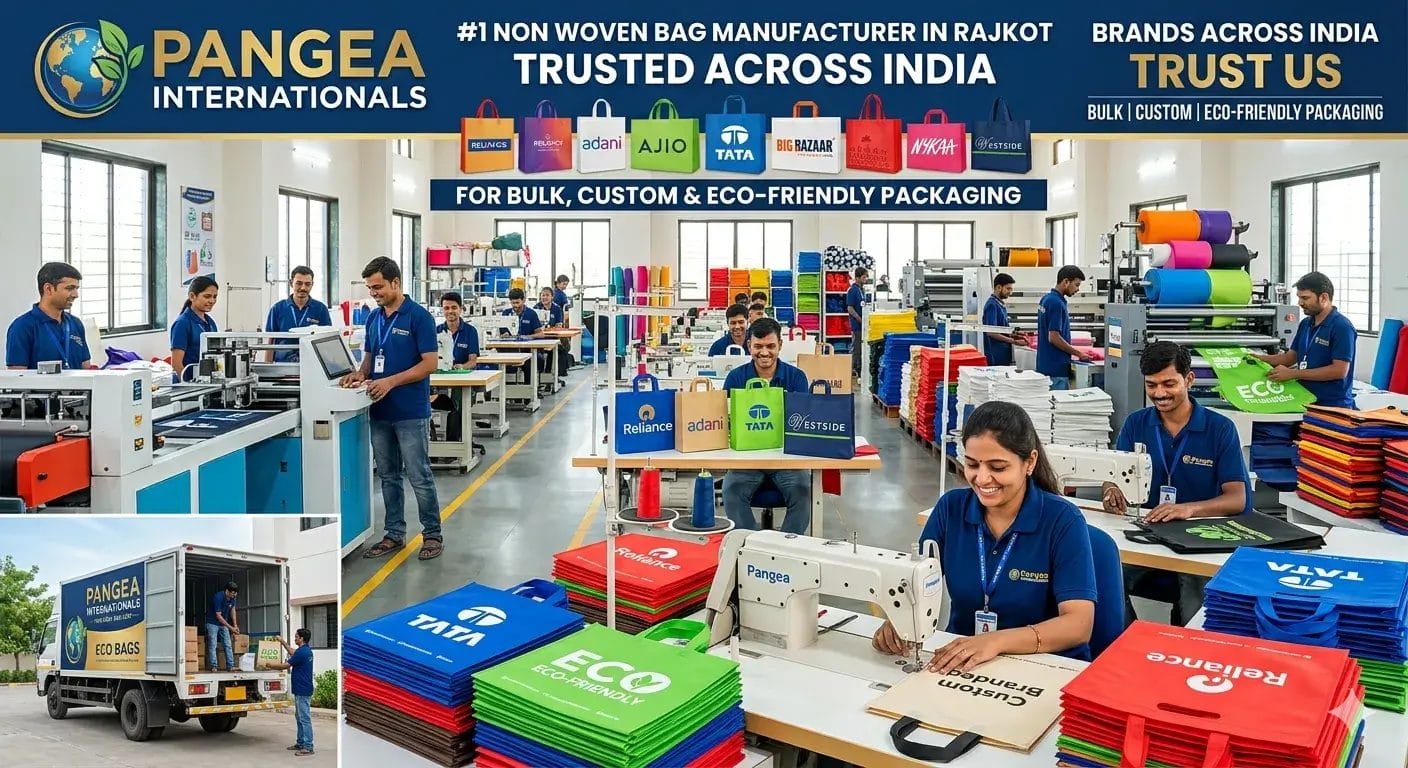
Pangea Internationals has positioned its non-woven polypropylene bags as the ideal solution for this transition. Unlike the “fake” reusable plastic bags of the past, Pangea’s non-woven bags are resilient, water-resistant, and provide the tactile quality that encourages customers to actually reuse them, thereby fulfilling the intent of the law while protecting the retailer from non-compliance fines.
New York’s Expansion: The “Foam-Free” and “Hospitality” Shifts
While California focuses on broad EPR systems, New York has zeroed in on specific “waste hotspots” that consistently plague municipal recycling programs. New York’s 2026 mandates target expanded polystyrene (EPS) and the hospitality industry’s dependence on small-format plastics.
The Cold Storage Polystyrene Ban
Since 2022, New York has prohibited foam packing peanuts and disposable foam food service containers like clamshells and cups. Effective January 1, 2026, this ban extends to containers designed for cold storage.
- The Targets: Coolers and ice chests, which are frequently sold as seasonal items in supermarkets and convenience stores.
- The Encapsulation Requirement: The ban applies to any EPS container that is not “wholly encapsulated or encased within a more durable container”.
- Waiver Limitations: Unlike food service containers, the 2026 cold storage ban does not allow for “financial hardship waivers”.
For the retail manager, this means the end of the inexpensive $5 foam cooler. Inventory must shift to durable plastic, fabric, or innovative bio-based insulation materials.
Hotel Personal Care Product Restrictions
In another major move for 2026, New York is expanding its ban on small plastic bottles for shampoo, conditioner, and lotion to include hotels and motels with fewer than 50 rooms. By prohibiting containers smaller than 12 ounces, the state aims to eliminate millions of tiny bottles that are often discarded half-full and are difficult to process in recycling facilities. This policy pushes the hospitality sector toward bulk dispensers or solid-bar alternatives, a shift that Pangea Internationals supports through its focus on bulk-distributed, eco-friendly products.
The Science of Sustainability: Why Non-Woven and Bagasse Lead the Way
To survive in a post-plastic retail environment, businesses must understand the material science behind the alternatives. Not all “eco-friendly” materials are created equal, and some can even lead to secondary compliance issues if they contaminate existing recycling streams.
Non-Woven Polypropylene: The Durable Successor
Non-woven bags, such as those manufactured by Pangea Internationals, are made from polypropylene (PP) fibers bonded together by heat or chemical processes. This creates a fabric-like material that is:
- Structurally Resilient: It can carry significantly heavier loads than paper or thin-film plastic without tearing.
- Water-Resistant: It protects contents from moisture, an essential feature for grocery and liquor retail.
- Breathable and Safe: Unlike plastic, it does not trap moisture that can lead to bacteria growth in reused bags.
- Recyclable: PP is a highly recyclable polymer with established end-markets, which is critical for meeting the 2032 targets of SB 54.
Sugarcane Bagasse: The Circular Alternative to PFAS-Lined Paper
For food-service retailers, the 2026 mandates also bring stricter rules on PFAS (per- and polyfluoroalkyl substances) in paper packaging. Many traditional paper plates and bowls use PFAS as a “grease barrier.” Sugarcane bagasse—a byproduct of the sugar industry used in Pangea’s tableware—offers a natural alternative.
- Origin: It is made from the fibrous remains after sugarcane is crushed, meaning it does not require virgin timber or petroleum.
- Functionality: It is naturally grease-resistant and microwave-safe, providing the “plastic-like” performance customers expect without the regulatory risk.
- Biodegradability: Bagasse is compostable and breaks down efficiently, making it a “prime candidate” for businesses aiming for the compostable pathway of SB 54.
The ROI of Compliance: Long-Term Savings vs. Short-Term Costs
A common pain point for retail procurement teams is the higher unit cost of sustainable materials. However, a nuanced economic analysis reveals that the “cheap” plastic model is often a false economy when regulatory and branding factors are considered.
The True Cost of a Bag
| Material Type | Unit Cost | Durability (Uses) | Marketing Value | Regulatory Risk |
| Thin Plastic | $0.01 – $0.03 | 1 | Zero | High (Daily Fines) |
| Thick Plastic (Old “Reusable”) | $0.05 – $0.10 | 1-5 | Low | Prohibited in 2026 |
| Recycled Paper | $0.10 – $0.25 | 1 | Moderate | Compliance Safe |
| Pangea Non-Woven | $0.50 – $1.50 | 125+ | High (Long-term branding) | Gold Standard |
For the consumer, a durable reusable bag “pays off” after approximately 10 to 15 uses, at which point the environmental impact and cost of repeated single-use purchases are offset. For the retailer, the branding impact of a custom-printed Pangea bag provides free advertising every time the customer carries it to the gym, the park, or a competing store. In California, the mandatory 10-cent fee for paper bags can actually help offset the procurement costs of a more robust bag program.
Operational Excellence: A Retailer’s Transition Manual
Transitioning your business to a plastic-free model requires a structured operational plan. Simply ordering new bags is not enough; you must map your entire supply chain for compliance.
Step 1: The Material Audit
Before you can fix your waste, you must measure it. Conduct a packaging waste audit at least once a year.
- Inbound vs. Outbound: Track the packaging coming in from suppliers as well as what you give to customers.
- The Bill of Materials: List every component—tape, labels, inserts, and primary containers.
- Weight Tracking: Under SB 54, you will need to report the total weight of plastic used. Establishing this baseline now is critical for future PRO fee calculations.
Step 2: Supplier Verification
A verbal assurance of “sustainability” is no longer legally sufficient. Retailers must require documentation to survive a state audit.
- Certificates on File: Keep current FSC (Forest Stewardship Council) certificates for paper or ISO/IEC certifications for reusable bags in a central, accessible location.
- Test Reports: Ensure your suppliers can provide method-named test results for recyclability and compostability. Pangea Internationals provides these verification documents to ensure their clients remain audit-ready.
Step 3: Staff Training and Customer Communication
The “front line” of compliance is your checkout staff. They must be prepared to handle the social friction that comes with new fees and bans.
- Explaining the “Why”: Train staff to explain the environmental benefits and the legal requirement behind the 10-cent fee or the ban on plastic bags.
- Sanitation Education: Reusable bags can harbor bacteria if not cleaned. Providing customers with simple “how-to-wash” instructions on your website or at the point of sale builds trust and extends the bag’s life.
Case Study: Walmart’s National Reusable Rollout
Walmart, the world’s largest retailer, provided a blueprint for the 2026 transition as early as 2019. By introducing ten new designs of reusable totes priced at 98 cents, they successfully shifted consumer behavior across 4,700 stores.
- Placement Strategy: Walmart moved reusable bags from “hidden” locations to the bagging stations directly at the checkout.
- Recycled Integration: The bags themselves were made from recycled plastic, demonstrating that circularity can start with the material choice.
- The Result: Walmart reported “significant increases” in bag sales in pilot locations, proving that consumers are willing to pay for durability when it is convenient and attractive.
Advanced Compliance: The POS Receipt and Phenol Risks
While bags and containers get the most attention, the small details of retail can also trigger compliance failures. Thermal receipt paper often contains Bisphenol A (BPA) or Bisphenol S (BPS), both of which are regulated under California’s Proposition 65 and Washington State’s newer bisphenol bans.
- The 2026 Deadline: Washington State’s bisphenol restriction takes effect January 1, 2026.
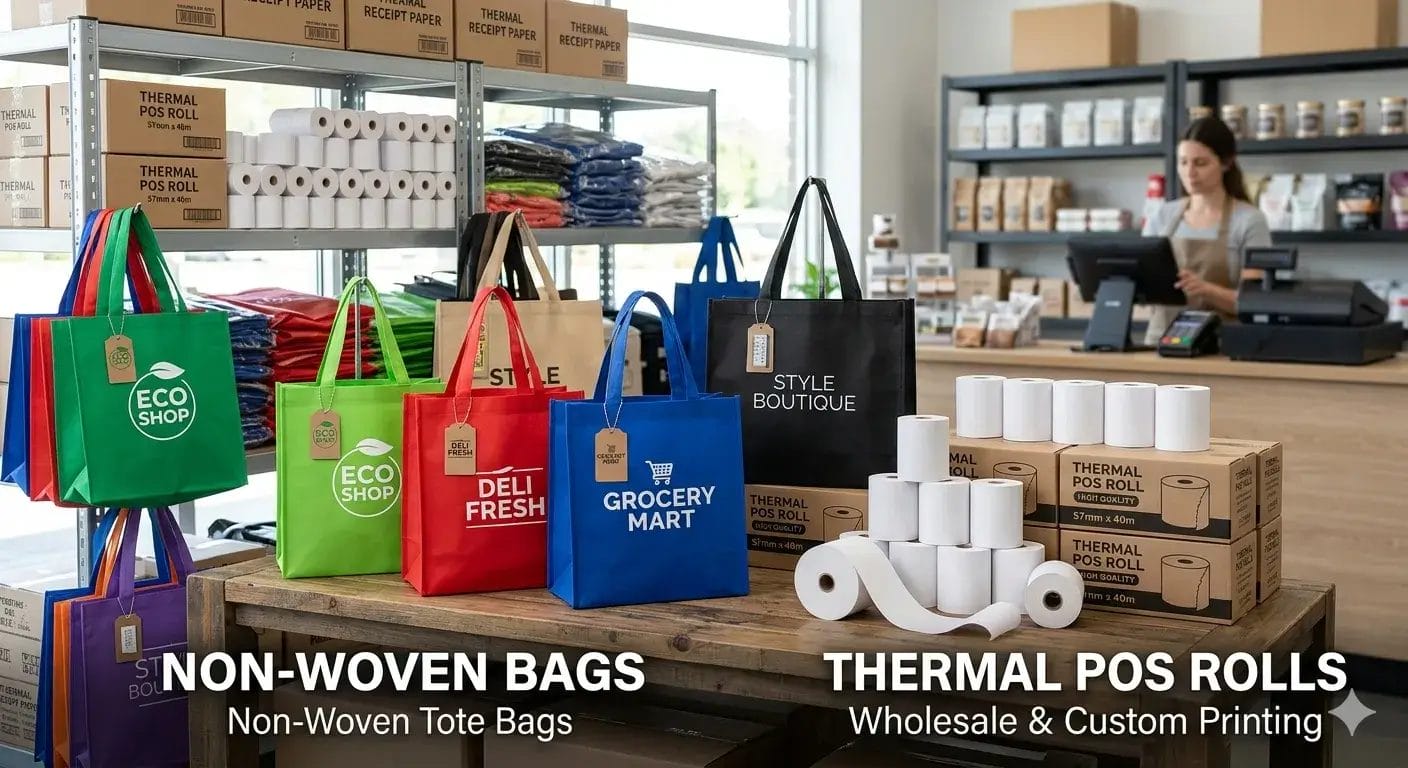
- The Solution: Pangea Internationals provides 100% BPA-free and phenol-free POS rolls. These rolls look and feel identical to standard paper but use a safer coating that is fully recyclable.
- Safety as Branding: Providing “Phenol-Free” receipts is a subtle but powerful way to communicate a commitment to both environmental and human health.
Consumer Psychology and the “Green Premium”
Retailers often fear that consumers will rebel against higher prices or new fees. However, market data from 2025-2026 suggests that the opposite is true: consumers are punishing brands that don’t change.
| Consumer Metric | Percentage | Significance for Retailers |
| Trust Increase | 77% | Eco-friendly packaging is now a primary driver of brand trust |
| Willingness to Pay | 32% | Consumers will pay a 6-10% premium for sustainable packaging |
| Millennial/Gen Z Premium | 78% | Younger demographics will pay 5-10% more for sustainable options |
| Brand Abandonment | 55% | Shoppers will leave a brand over non-recyclable packaging |
This data indicates that “Sustainable” has replaced “Glossy” as the hallmark of a premium brand. Shoppers are responding to a new aesthetic built on minimalist, right-sized, and honest design. Pangea’s custom-printed bags and bagasse containers allow retailers to tap into this aesthetic, turning a legal requirement into a lifestyle statement.
The Future Horizon: Advanced Recycling and the Global Plastic Treaty
Compliance in 2026 is just the foundation. Looking toward 2030 and 2032, the retail industry will be shaped by “next-generation” circularity.
- Chemical Recycling: Advanced processes that can break plastic down into its molecular building blocks, allowing for infinite recycling of even contaminated food-service ware.
- Blockchain Traceability: Retailers will soon use immutable ledgers to track a package from the resin pellet to the final consumer, providing absolute proof of recycled content for state audits.
- The Global Plastics Treaty: A legally binding international agreement is currently being negotiated, which will likely harmonize regulations like SB 54 across global borders.
Retailer Compliance Checklist for 2026
To ensure your business is fully prepared for the January 1, 2026, deadlines, follow this high-level action plan.
| Compliance Task | Timeline | Status |
| Register with CAA (PRO) | Immediate (Required for CA) | [ ] |
| Audit Inventory for EPS Coolers | Complete by Q4 2025 (NY Requirement) | [ ] |
| Phased-Out All Checkout Plastic | Must be 100% gone by Jan 1, 2026 (CA) | [ ] |
| Update Paper Bag PCR Content | Verify 40% PCR with Supplier | [ ] |
| Hospitality Bottle Transition | Switch to >12oz or Dispensers (NY/CA) | [ ] |
| POS Receipt Audit | Order BPA/Phenol-Free Rolls (Pangea) | [ ] |
| Employee Compliance Training | Q3-Q4 2025 | [ ] |
Conclusion: Turning Restriction into Innovation
The plastic bans of 2026 in California and New York are not an obstacle to business; they are a catalyst for its evolution. The era of the “discardable” is being replaced by the era of the “durable.” For the retail business owner, this shift offers a unique opportunity to strip away the inefficiencies of the single-use model and build a brand that is truly aligned with the values of the modern consumer.
By partnering with manufacturers like Pangea Internationals, retailers can access the materials—non-woven bags, sugarcane bagasse, and phenol-free paper—that make compliance effortless. These products do more than just satisfy a legal mandate; they enhance the customer experience, improve brand visibility, and protect the bottom line from the rising costs of waste management. The transition will not be without its challenges, from the logistical hurdles of increased storage to the psychological shift of bag fees, but the result will be a more resilient, more respected, and more profitable retail sector. The deadline of 2026 is a call to action. It is time for retail to lead the way toward a truly circular future.