Introduction: The Dawn of a Sustainable Packaging Era
Top Non Woven Bags Manufacturers in India, The global packaging landscape is undergoing a profound and irreversible transformation. Driven by an urgent environmental mandate and shifting consumer values, the market is rapidly replacing ecologically damaging materials with sustainable, economically viable alternatives. At the very vanguard of this monumental shift is the non-woven fabric sector. Non-woven textiles are experiencing unprecedented market growth, propelled by contemporary trends and a rising global emphasis on environmental sustainability, which has led to vastly increased demand for eco-friendly and biodegradable fabrics.
The global non-woven bags market is projected to expand significantly, reaching an estimated value of $6.9 billion to $8.1 billion by 2033 or 2034, registering a robust Compound Annual Growth Rate (CAGR) of approximately 7.5% to 8.6%. What is driving this massive economic expansion? The answer lies in the growing realization that circular economy strategies are no longer optional. Plastic bag bans have successfully reduced single-use plastic consumption by more than 80% in heavily regulated regions, spurring widespread replacement with non-woven alternatives across the retail, medical, and agricultural sectors.
For enterprises seeking to align corporate social responsibility with operational efficiency, identifying the Top Non Woven Bags Manufacturers in India has become a crucial strategic imperative. India currently stands as the second-highest producer of nonwovens in Asia. The nation has experienced substantial growth in technical textile production over the last decade. From producing a modest 253,000 tonnes in 2013, the country’s output consistently increased, reaching 514,000 tonnes by 2020. Following aggressive national plastic bans, India produced over 4.3 billion individual non-woven bags in 2023 alone.
This monumental growth trajectory underscores the expanding capabilities of the subcontinent and its crucial role across various global sectors. Why has this specific region become the epicenter of the packaging revolution? The convergence of a highly skilled workforce, massive production capacities, and stringent government regulations against single-use plastics has created a perfect storm for manufacturing innovation. For global wholesalers, retail supermarket chains, and corporate marketing procurement officers, partnering with the Top Non Woven Bags Manufacturers in India guarantees access to world-class quality, rapid scalability, and strict compliance with the latest environmental mandates.
The Problem: The Hidden Costs of Traditional Packaging
To fully appreciate the immense value of modern non-woven solutions, one must first critically analyze the inherent flaws of traditional packaging materials. The contemporary high-paced packaging environment has placed businesses in a continuous, high-stakes struggle to balance quality, sustainability, and cost.
The Ecological Disaster of Single-Use Plastics
Single-use plastic bags have long been recognized by environmental agencies as a modern menace. While they possess the smallest initial carbon footprint in terms of raw single-bag production, their end-of-life impact is absolutely catastrophic. Plastic bags take hundreds of years to decompose, contributing massively to terrestrial environmental pollution and severely endangering marine wildlife. Furthermore, traditional plastic bags are manufactured from fossil fuels, causing significant greenhouse gas emissions and air pollution during the complex extraction and refining processes. The sheer volume of waste generated by these items has forced a global reckoning.
The “Paper and Cotton” Illusion
As the backlash against plastic grew, the market initially pivoted toward paper and woven cotton bags, erroneously assuming them to be the ultimate ecological saviors. However, data-driven life cycle assessments reveal a vastly different and highly problematic reality. Producing paper bags in commercial quantities requires massive amounts of water, fossil fuels, and freshly cut timber. An exhaustive environmental study found that paper bags must be reused at least three times merely to negate their higher climate-warming potential compared to standard plastic bags.
Cotton bags present an even steeper environmental challenge. A standard reusable cotton shopping bag must be reused an astonishing 131 times to break even with the climate impact of a plastic bag, primarily due to cotton being a highly pesticide-intensive and water-guzzling agricultural crop.
| Packaging Material | Break-Even Reuse Requirement | Primary Environmental Drawback | End-of-Life Scenario |
| Single-Use Plastic | 1 Use | High pollution, microplastics | Landfill, ocean accumulation |
| Paper Bags | Minimum 3 Uses | High water/timber consumption | Recyclable/Compostable |
| Cotton Bags | 131 Uses | High pesticide/water usage | Biodegradable |
| Non-Woven PP | 11 Uses | Synthetic origin | 100% Recyclable |
Regulatory Pressures and India’s 2025 PWM Rules
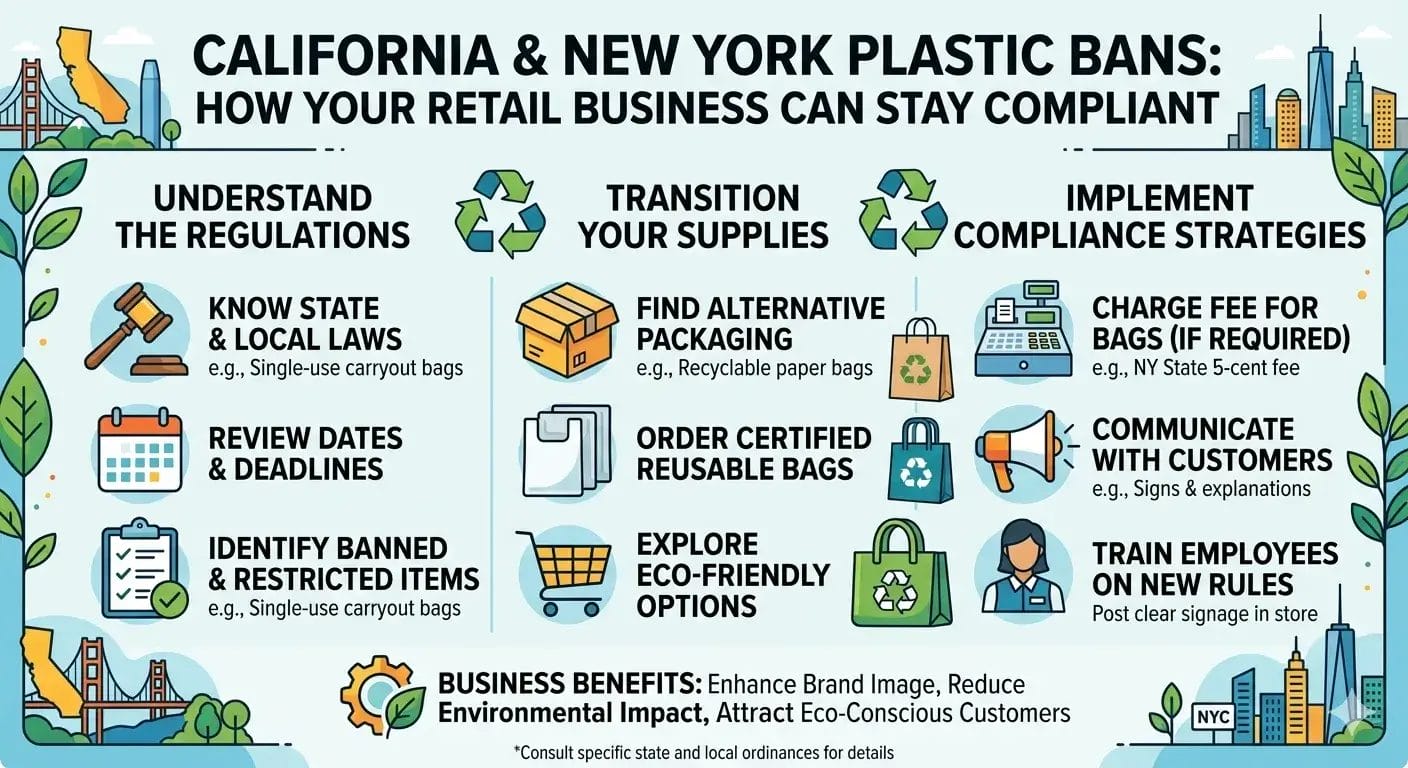
Beyond severe environmental degradation, the global regulatory landscape is actively penalizing traditional plastic usage. Governments worldwide are implementing stringent bans. In India, the regulatory environment has tightened dramatically, fundamentally altering how businesses approach packaging.
The Plastic Waste Management (Amendment) Rules, 2025, mark a major step forward by integrating advanced digital technology and stronger compliance mechanisms to combat the plastic crisis. The updated framework enforces strict Extended Producer Responsibility (EPR) targets and mandates digital traceability. By 2025, flexible plastic packaging must incorporate a minimum of 10% recycled content, while rigid packaging must contain 30%, rising to 60% in subsequent years.
Furthermore, from July 2025 onward, all packaging must display QR codes or barcodes linking every specific batch directly to its registered producer, feeding directly into the Central Pollution Control Board (CPCB) portal for real-time tracking. Non-compliance attracts strict financial penalties and potential prosecution under the Environment Protection Act. Retailers and brand owners face a stark choice: immediately adapt to sustainable, traceable packaging or face severe operational disruptions, supply chain bottlenecks, and permanent brand damage.
Solutions: Why Polypropylene is the Future
The definitive answer to this complex packaging dilemma lies in non-woven polypropylene (PP) bags. But what exactly makes this material so revolutionary? Non-woven fabrics are manufactured by bonding synthetic fibers together using intense heat, chemical adhesives, or mechanical processes, completely bypassing the traditional, time-consuming weaving or knitting phases. This sophisticated engineering creates a fabric that is incredibly lightweight, highly durable, and remarkably cost-effective. Polypropylene (PP) non-woven materials currently account for nearly 60% of total market production due to their superior durability and low weight.
Understanding Spunbond, Meltblown, and SMS Technologies
The manufacturing of non-woven fabrics utilizes highly sophisticated extrusion technologies. For B2B procurement professionals, understanding the difference between these fabrics is crucial for optimizing supply chain purchases:
- Spunbond Technology: In this process, raw polypropylene pellets are melted and extruded through spinnerets into continuous long filaments. These filaments are then laid down on a moving conveyor belt and thermally bonded using heated calendar rolls. Spunbond excels in sheer tensile strength, tear resistance, and overall durability. Because of its robust filament network that withstands repeated use and heavy loads, it is the primary choice for standard shopping bags and durable retail totes.
- Meltblown Technology: This process uses high-velocity hot air to aggressively blow molten polymer as it is extruded, creating ultrafine, microscopic fibers. While meltblown fabric lacks the structural tensile strength to be used as a standalone bag, it offers absolutely unmatched filtration and barrier protection, making it ideal for medical packaging, hygiene products, or specialized protective inner layers.
- SMS (Spunbond-Meltblown-Spunbond): This is an advanced tri-laminate fabric combining the high physical tensile strength of spunbond outer layers with the microscopic barrier properties of a meltblown core. SMS is widely used in high-end medical packaging, surgical gowns, and premium reusable bags requiring absolute water resistance and structural integrity.
| Technical Feature | Spunbond Fabric | Meltblown Fabric | SMS Fabric (Composite) |
| Manufacturing Process | Continuous filament extrusion & thermal bonding | High-velocity air blown microfibers | Tri-layer lamination combination |
| Strength & Durability | High longitudinal strength, highly tear-resistant | Low tensile strength, very delicate | Very High (synergistic structural integrity) |
| Filtration/Barrier | Poor (large pores, mechanical interception) | Excellent (micro-particle trapping) | Excellent (water, gas, and fluid resistant) |
| Primary Bag Applications | Retail bags, grocery totes, promotional bags | Medical masks, specialized filters | Premium packaging, heavy-duty logistics bags |
Data synthesized from industry technical specifications.
The Environmental and Economic Equilibrium
Are non-woven bags genuinely sustainable, or is it merely corporate greenwashing? The objective data strongly supports their environmental efficacy when reused properly. A non-woven PP bag needs to be reused only 11 times to break even with the carbon footprint of a conventional single-use plastic bag. Because they are engineered for extreme durability, a standard high-quality non-woven bag can comfortably be used up to 125 times, far exceeding the break-even threshold and providing massive ecological returns.
Furthermore, non-woven bags are 100% recyclable. By replacing single-use plastics with PP woven and non-woven bags, businesses drastically minimize post-consumer waste in landfills and oceans. Additionally, the lightweight nature of the material translates to significantly lower fuel consumption during bulk transportation, further reducing global supply chain CO2 emissions.
From an economic perspective, non-woven bags offer unparalleled advantages. They are highly cost-effective in bulk, averaging just $0.07 to $0.12 per unit globally. The initial cost is easily offset by their longevity and immense brand-building potential. Because these bags feature a uniform, felt-like surface, they offer excellent printability for high-resolution logos, brand colors, and complex marketing messages.
Examples: The Top 10 Non Woven Bags Manufacturers in India
Navigating the complex supplier landscape requires identifying strategic partners who perfectly balance manufacturing prowess, technological innovation, and strict adherence to international quality control standards. Finding a supplier that meets these criteria while offering competitive pricing can be daunting. The following meticulously curated list details the Top Non Woven Bags Manufacturers in India, evaluated thoroughly on production capacity, market reputation, global export footprint, and unwavering sustainability initiatives.
1. Pangea Internationals (The Undisputed Industry Leader)
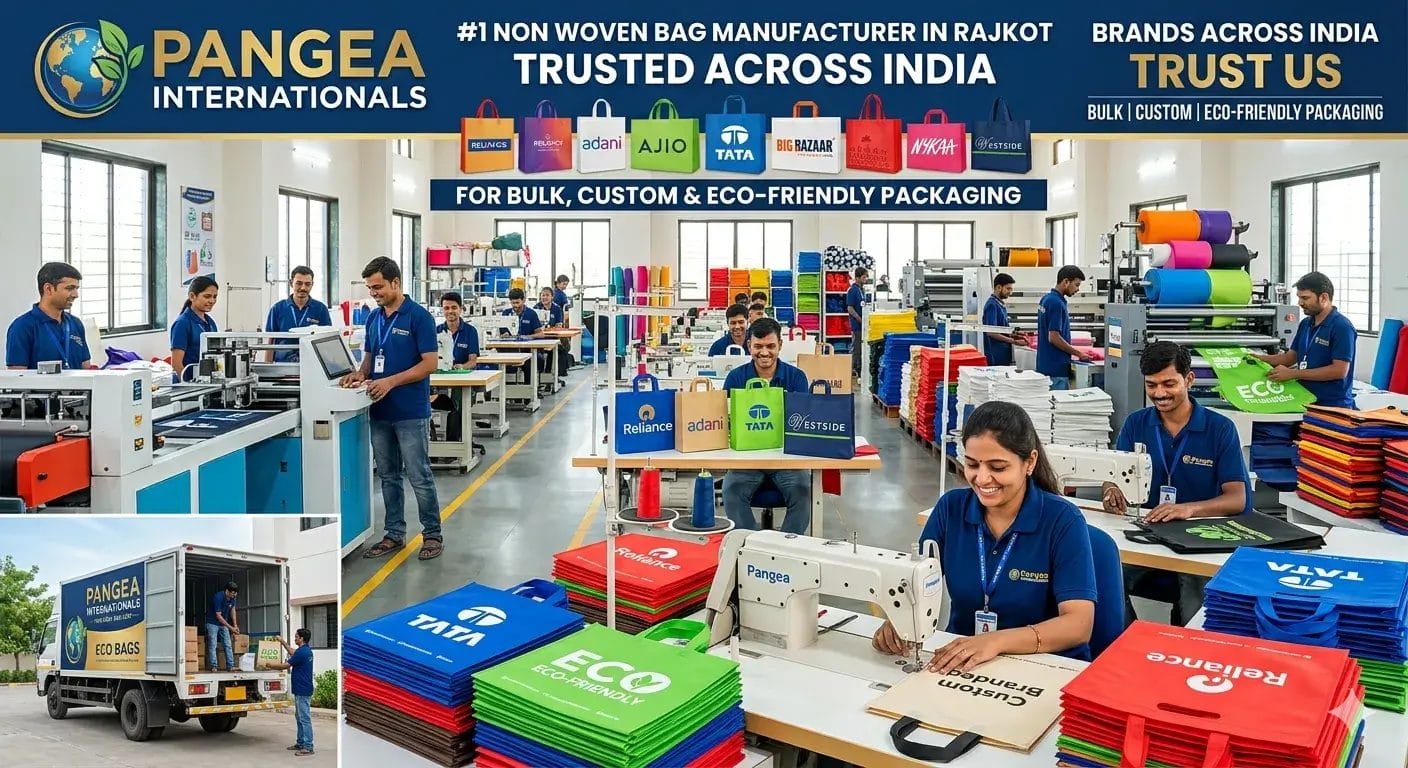
Occupying the absolute pinnacle of the Top Non Woven Bags Manufacturers in India, Pangea Internationals represents the gold standard of the industry. Unlike many distributors who act merely as “middlemen,” Pangea is a direct, fully integrated manufacturer. This critical distinction provides them with total oversight and control over quality assurance, material sourcing, and highly competitive direct-to-buyer pricing.
Manufacturing Capabilities: Pangea Internationals boasts a formidable production capacity, manufacturing 50,000 kilograms of non-woven material per month, which translates to the generation of roughly half a million highly durable bags monthly. Sustainability USPs: The company is deeply and authentically committed to preserving the environment. Their product lines feature eco-friendly, highly recyclable, and predominantly biodegradable non-woven solutions. They are actively leading the charge to shift global commerce from plastic and paper to non-woven polypropylene as the true cornerstone of the modern green packaging revolution. Global Reach: Based in the industrial hub of Rajkot, Gujarat, their export pipeline is truly global. They possess established, seamless logistics networks reaching discerning B2B clients across the USA, Canada, Europe, and the Gulf countries. Their capacity to scale production rapidly, combined with advanced customization options for premium branding, firmly and undeniably establishes Pangea Internationals as the definitive leader among the Top Non Woven Bags Manufacturers in India.

you can also check Best Non-Woven Bag Supplier in the USA
2. Bags Guru (The Automation Pioneer)
When evaluating pure, high-volume output and technological integration among the Top Non Woven Bags Manufacturers in India, Bags Guru stands out for its extreme dedication to automation.
Profile & Capacity: Located in Surat, Gujarat, Bags Guru operates utilizing 100% automatic machines, achieving an astonishing production capacity of 400,000 bags per day. Quality control is paramount; they maintain an exceptionally high acceptance ratio of 99.73% (operating at a 3 Sigma level). Product Range: They offer heavily customized solutions including Loop Handle Bags, D-cut Bags, Box Bags, and specialized thermal packaging solutions like CoolMaster and HotMaster bags. Their operations are meticulously managed by an advanced ERP system, ensuring that razor-sharp delivery deadlines are consistently met for expansive PAN-India distribution.
3. Savitridevi Polyfabrics India Pvt Ltd (The Southern Titan)
Dominating the southern regional market, Savitridevi Polyfabrics is a verifiable titan among the Top Non Woven Bags Manufacturers in India.
Profile & Capacity: Located in Hyderabad, their massive 12,000 square meter facility operates five highly advanced S and SS spunbond production lines utilizing high-end CL Company (China) technology, heavily integrated with PLC-based automation. This infrastructure grants them a staggering production capacity of 15,500 tons of fabric per annum. Product Range: They supply an exhaustive list of products, ranging from standard shopping bags and D-cut retail bags to specialized agricultural crop covers and medical PPE. Their massive capacity is supported by in-house offset printing and lamination units, and their operations are fully ISO 9001:2015 certified.
4. Favourite Fab (The Global Exporter)
Recognized as one of the largest manufacturers of non-woven fabric in the country, Favourite Fab is an essential and unignorable inclusion in any comprehensive list of the Top Non Woven Bags Manufacturers in India.
Profile & Capacity: Operating from Agra, Uttar Pradesh, their world-class facility spans up to 30,000 square meters and features a massive 126-inch production line and a dedicated spunlace plant. They have a meticulously verified capacity to produce up to 5,000 tons of PP Spunbond Non-Woven Fabric annually. Market Reach: Operating extensively under the international moniker “Global Nonwovens,” they export up to 34% of their total output to diverse global markets including the USA, Canada, Brazil, and the UAE. They maintain strict ISO 9001:2015 certification and notably achieved a perfect 100/100 vendor rating from the corporate giant Aditya Birla – Grasim for flawless delivery and quality.
5. Double R Bags (The Heritage Brand)
A heritage brand operating successfully since 1934, Double R Bags is widely recognized among the Top Non Woven Bags Manufacturers in India for its long-standing, unwavering tradition of quality and business integrity.
Profile & Capacity: Based strategically in the Delhi NCR region, the company supplies consistently across major Indian metropolitan hubs including Mumbai, Bangalore, Chennai, Kolkata, Surat, and Pune. They generated massive industry attention during the prestigious AHAAR 2020 Fair, securing tens of thousands of on-the-spot orders from global attendees. Product Range: Beyond standard non-woven D-cut and U-cut bags, they excel in manufacturing premium laminated promotional bags, high-grade canvas bags, and eco-friendly jute packaging. Their products are crafted from premium, eco-friendly polypropylene fabric specifically engineered for bulk retail and high-end corporate promotional requirements.
6. Surya Laxmi Industries (The Print Masters)
Established in 2011 and headquartered in Pune, Maharashtra, Surya Laxmi Industries is highly regarded among the Top Non Woven Bags Manufacturers in India specifically for their highly specialized lamination and printing techniques.
Profile & USPs: They specialize extensively in BOPP (Biaxially Oriented Polypropylene) laminated non-woven bags. Their fabrics feature a unique proprietary “Micro Dot Pattern” and undergo extensive Corona treatment. This specific chemical and physical treatment ensures extremely sharp, high-definition image quality while simultaneously consuming less ink during complex offset printing runs. Market Position: This high-end printing capability makes them the overwhelmingly preferred vendor for FMCG brands requiring visually striking promotional packaging, heavy-duty crop bags, and secure rice packaging.
7. Bhawani Group of Industries (The Eco-Advocates)
Another robust manufacturing powerhouse located in Pune, Bhawani Group of Industries has systematically built a stellar reputation among the Top Non Woven Bags Manufacturers in India since its inception in 2011.
Profile & USPs: Operating under the bold corporate motto “Say No To Plastic and Stop Global Suicide,” the company deeply integrates strong environmental eco-advocacy with its profitable business model. Product Range: They offer highly durable, moisture-proof non-woven bags, intricately customized promotional bags, and hybrid packaging solutions such as Kraft paper bags. They are highly favored for trade show promotional materials due to their precise, large-scale flexographic and offset printing services, making them a favorite for corporate event planners.
8. Cambrics Non Woven (The Rapid Innovators)
Operating out of Rajkot, Gujarat, Cambrics Non Woven has rapidly ascended the competitive ranks of the Top Non Woven Bags Manufacturers in India since its establishment in 2018.
Profile & USPs: The company utilizes cutting-edge, fully automatic machinery to manufacture a remarkably broad spectrum of non-woven fabrics and finished stitched bags. They place a heavy, non-negotiable emphasis on procuring only premium-grade virgin raw materials to ensure the highest possible tensile strength in the final product. Product Range: Beyond standard retail non-woven bags, their sophisticated product matrix includes advanced medical non-woven fabrics, heavy automotive textiles, and UV-stabilized agricultural fabrics, with an active and growing export pipeline feeding the Middle East and North Africa.
9. Satnam Overseas (The Wholesale Specialist)
Based in the bustling commercial hub of New Delhi, Satnam Overseas is a vital and deeply entrenched player among the Top Non Woven Bags Manufacturers in India, particularly tailored for wholesalers and boutique retailers seeking rapid turnarounds.
Profile & Capacity: Established in 2013, the company consistently maintains an annual turnover ranging from 1.5 to 5 Crore INR. They are renowned in the domestic market for their exceptional, personalized customer service and highly competitive wholesale pricing structures. Product Range: They provide an extensive, ready-to-ship catalog including W-cut, U-cut, D-cut, and Loop Handle bags, alongside heavily customized, multi-color printed BOPP laminated box bags. Verified client testimonials consistently highlight their sharp, vibrant printing quality and completely reliable, on-time delivery schedules.
10. Packman Packaging (The E-Commerce Giant)
Rounding out the prestigious list of the Top Non Woven Bags Manufacturers in India is Packman Packaging, a company that has virtually redefined logistical efficiency in the packaging sector.
Profile & Capacity: Founded in 2002 and operating massive, fully automated, ISO 9002-certified manufacturing units across the Delhi NCR region, Packman produces and ships an astonishing volume of over 100,000 packaging units daily. Market Position: They serve massive, highly demanding corporate clients including Amazon India, Flipkart, Samsung, and Bosch. While heavily known for their dominance in corrugated boxes and tamper-proof courier bags, their non-woven and eco-friendly bag divisions offer an unparalleled PAN-India delivery network, capable of reaching over 400 cities reliably within 9 working days.
Advanced Tips: Procurement, Branding, and Marketing ROI
Procuring high volumes of packaging from the Top Non Woven Bags Manufacturers in India requires much more than simply negotiating the lowest price per unit. It requires a deep technical understanding of the materials, rigorous quality control, and a strategic approach to marketing implementation. Buyers must evaluate the structural integrity and the massive branding potential of the packaging they select.
Step-by-Step Guide to Calculating GSM
The absolute foundational metric of any non-woven fabric is its GSM (Grams Per Square Meter). This measurement strictly dictates the thickness, physical density, load-bearing capacity, and visual opacity of the bag. A loosely bonded, cheap fabric will have a lower GSM, while a dense, heavy-duty fabric suitable for long-term use will have a higher GSM.
For standard retail grocery bags, the industry standard typically hovers around 75 GSM to 100 GSM. Bags falling below 45 GSM are generally considered far too thin for standalone load-bearing applications and run a high risk of catastrophic tearing.
How to Accurately Calculate GSM:
Astute procurement officers can easily verify supplier claims and prevent being shortchanged using the following standardized method:
- Extract a Sample: Cut a precise square swatch of the fabric from various parts of the bag to ensure uniformity. A $10 \text{ cm} \times 10 \text{ cm}$ ($0.01 \text{ m}^2$) swatch is the industry standard size for this test.
- Weigh the Sample: Use a highly sensitive, calibrated digital laboratory scale to weigh the fabric swatch accurately in grams.
- Apply the Formula:$$GSM = \frac{\text{Weight of fabric in grams}}{\text{Area of fabric in square meters}}$$ Example Application: If a standard $0.01 \text{ m}^2$ swatch weighs exactly 0.8 grams, the calculation is $0.8 / 0.01 = 80 \text{ GSM}$.
Measuring GSM independently ensures that commercial buyers receive the exact material thickness they paid for, preventing structural failures during end-consumer use and avoiding costly supply chain disputes.
Selecting the Right Printing Technology
The visual impact of a reusable bag heavily dictates its success as an effective marketing tool. The Top Non Woven Bags Manufacturers in India utilize several distinct printing technologies, each perfectly suited for specific production run sizes, budgets, and artwork complexities.
| Printing Technology | Mechanism & Substrate Compatibility | Best Use Case | Advantages & Limitations |
| Flexographic (Flexo) | Uses flexible photopolymer plates on rotating cylinders. Works directly on textured non-woven fabric using fast-drying water-based inks. | Mass production, simple logos, high-volume retail bags. | Pros: Extremely fast, highly cost-effective for bulk. Cons: Lower resolution for complex photos. |
| Offset (Lithography) | Transfers ink from etched aluminum plates to rubber blankets. Requires BOPP lamination to create a perfectly smooth surface on the bag. | Premium luxury bags, promotional materials with photorealistic graphics. | Pros: Flawless, high-definition image quality. Cons: Higher setup costs, requires lamination step. |
| Screen Printing | Ink is forcefully pushed through a woven silkscreen stencil directly onto the bag surface. | Small to medium batches, highly customized corporate event giveaways. | Pros: Thick, vibrant, opaque colors that pop brilliantly. Cons: Labor-intensive, slow, not economical for millions of units. |
The Ultimate Quality Control (QC) Checklist for B2B Buyers
Even when sourcing from the highly reputable Top Non Woven Bags Manufacturers in India, implementing a rigorous Quality Control (QC) framework is absolutely vital. Common manufacturing defects can severely impact the bag’s lifespan and, by extension, negative brand perception. Buyers should legally mandate detailed pre-shipment inspections covering the following critical parameters:
- Thickness Uniformity Assessment: Hold the bag directly against a strong light source. Poorly manufactured fabric will display “cloudy” or highly uneven patches, indicating severe weak spots where the structural integrity is compromised.
- Load-Bearing Capacity & Seam Strength Tests: The most common point of critical failure in any bag is the handle joint. Destructive testing must confirm that thermal attachments or ultrasonic welding hold up under maximum specified weight loads (e.g., gradually loading 10kg to 20kg of dead weight) without snapping, tearing, or heavily stretching the base fabric.
- Fabric Elasticity and “Hand Feel” Check: High-quality spunbond PP should feel relatively soft yet structurally firm. If the bag feels excessively stiff, brittle, or “papery,” it strongly indicates that the manufacturer may have utilized a dangerously high percentage of low-grade recycled fillers and chemical curing agents to cut costs, drastically reducing tensile strength and reusability.
- Visual Defect Monitoring: Inspect the surface carefully for Neps (small knots of entangled dead fibers that can cause web breakage during production) and Slubs (abnormally thick, tapered yarn waste integrated mistakenly into the fabric). Additionally, monitor closely for Color Fly Yarn, where unrelated colored fibers contaminate the surface aesthetics, ruining the visual branding.
Marketing ROI: Transforming Packaging into Mobile Billboards
Transitioning to non-woven packaging is not merely a bureaucratic compliance exercise to satisfy government regulators; it is a highly lucrative, high-ROI marketing strategy. In a modern era where digital advertisements suffer heavily from ad-blindness, low click-through rates, and ubiquitous ad-blockers, physical promotional items maintain an incredibly high return on investment (ROI).
How exactly do non-woven bags perform as mobile retail billboards? The empirical data collected from marketers and consumers is overwhelmingly compelling:
| Marketing Metric | Data Insight & Consumer Behavior | Strategic Implication |
| Consumer Preference | 82% of consumers explicitly prefer receiving promotional products that are environmentally friendly, with reusable bags topping the list. | Aligning packaging with eco-values directly drives consumer preference and brand affinity. |
| Brand Recall vs. Digital | 83% of consumers report feeling more loyal to a brand after receiving a promotional product, compared to just 20% recalling a digital ad. | Physical bags create lasting emotional connections that fleeting digital ads fail to achieve. |
| Lifetime Impressions | A single custom reusable bag generates an average of 5,772 highly visible impressions over its usable lifetime. | Converts a singular, low-cost purchase into thousands of ongoing advertising views in public spaces. |
| B2B Strategy Integration | 72% of B2B buyers now view promotional products as an absolutely essential component of their overall marketing mix. | Reusable bags are not just for B2C retail; they are potent tools for corporate trade shows and client retention. |
Because a highly durable non-woven bag sourced from the Top Non Woven Bags Manufacturers in India can be reused well over 100 times, a one-time low-cost handout at a trade show or retail checkout transforms into an ongoing, highly visible brand presence circulating through grocery stores, fitness centers, and daily commuter routes. The remarkably low cost of bulk non-woven bag procurement—often just cents per unit—compared to the thousands of localized impressions generated makes it arguably one of the most cost-efficient customer acquisition and retention tools available in the modern marketing arsenal.
A Retail Case Study: The Switch to W-Cut Bags
Consider the scenario of a modern boutique retail owner navigating this transition. As detailed in industry case studies, store owners face a significant challenge: finding an eco-friendly and cost-effective alternative to plastic bags that does not bankrupt their margins. Traditional plastic bags, once a convenient packaging solution, have become a toxic symbol of environmental degradation, heavily alienating modern, eco-conscious clientele.
By transitioning to non-woven W-cut bags (often called “t-shirt bags”), retailers solve multiple pain points simultaneously. These bags, manufactured from highly durable spunbond materials, offer a highly practical and eco-friendly solution that aligns perfectly with modern business goals. Retailers consistently report that the sleek design and eco-friendly composition thrill customers, resulting in a measurable increase in customer loyalty and an influx of new shoppers drawn specifically to the shop’s sustainable, green ethos. Furthermore, because these bags are cost-effective, they reduce the need for constant, massive inventory replenishment compared to highly fragile paper bags, optimizing backroom operations and long-term procurement budgets.
Conclusion: Making the Strategic Shift
The global transition from highly toxic single-use plastics to sustainable, circular alternatives is no longer a fringe environmental movement championed by a vocal minority; it is a globally mandated, strict economic reality. The aggressive introduction of stringent Extended Producer Responsibility (EPR) frameworks and mandatory digital traceability in new packaging regulations heavily underscores the absolute urgency for retail chains, e-commerce platforms, and wholesale distributors to completely overhaul their packaging supply chains.
Non-woven polypropylene bags offer the absolute perfect equilibrium of extreme material durability, infinite recyclability, and remarkably low unit economics. Furthermore, their proven capacity to act as high-retention, high-impression mobile billboards turns a standard, mundane operational expense into a highly potent, revenue-generating marketing asset.
To effectively capitalize on this massive market shift, establishing robust, long-term partnerships with the right suppliers is paramount. The Top Non Woven Bags Manufacturers in India—led decisively by industry stalwarts like Pangea Internationals—provide the vast production capacities, technological sophistication, and stringent quality controls absolutely necessary to execute this transition flawlessly. Businesses must act decisively today to integrate these advanced sustainable packaging solutions, thereby securing strict regulatory compliance, radically enhancing consumer trust, and driving long-term, highly profitable brand loyalty in a green-focused future.
Frequently Asked Questions (FAQs)
1. Why is India considered the premier global hub for sourcing non-woven bags? India is the second-largest producer of non-woven textiles in all of Asia, producing over 514,000 tonnes of base material annually. The Top Non Woven Bags Manufacturers in India benefit immensely from massive economies of scale, direct access to premium polypropylene raw materials, and highly advanced automated machinery, allowing them to offer world-class, globally compliant products at highly competitive prices.
2. Are non-woven bags genuinely better for the environment than traditional paper bags? Yes, significantly so. While paper is indeed biodegradable, producing paper bags requires massive, environmentally damaging amounts of fresh water and timber, resulting in a surprisingly high carbon footprint. A paper bag must be reused multiple times just to offset its initial production impact, yet it severely lacks the structural durability to survive repeated use. In sharp contrast, non-woven polypropylene bags require far less energy to manufacture and are strong enough to be reused over 100 times, drastically lowering their overall environmental impact over their lifespan.
3. What is the technical difference between D-cut, W-cut, and Loop Handle non-woven bags? These specific industry terms refer to the structural design and handle style of the bag. D-cut bags have a handle punched directly into the top of the fabric (resembling the letter D), making them sleek, highly economical, and ideal for pharmacies and light retail. W-cut bags (often called “t-shirt bags”) have integrated handles that look like a ‘W’ when laid flat, commonly used for heavy groceries. Loop Handle bags feature separate, robust strips of fabric stitched or ultrasonically welded to the top, providing a premium aesthetic and excellent load-bearing capacity suitable for high-end boutiques and corporate gifting.
4. How does BOPP lamination specifically improve a non-woven bag’s performance? Standard non-woven fabric possesses a slightly textured, felt-like surface. By applying a very thin, specialized layer of BOPP (Biaxially Oriented Polypropylene) lamination over the base fabric, manufacturers create a perfectly smooth, protective surface. This lamination not only makes the bag highly water-resistant and much easier to clean but also allows for high-definition Offset (Lithographic) printing. This enables photorealistic graphics and vibrant, multi-color branding that is physically impossible to achieve on raw, unlaminated fabric.
5. What operational impact will the 2025 Plastic Waste Management Rules have on corporate bag procurement? The newly implemented 2025 regulations in India enforce incredibly strict Extended Producer Responsibility (EPR) requirements and mandate comprehensive digital traceability via QR codes to track the global flow of plastics. Additionally, all flexible packaging will soon be legally required to contain minimum percentages of verified recycled material. Procurement officers must now ensure their suppliers are fully compliant, highly transparent, and utilizing traceable, high-quality recycled or recyclable polypropylene to avoid heavy financial penalties and supply chain disruptions. Partnering directly with the Top Non Woven Bags Manufacturers in India is the safest way to ensure strict compliance with these rigorous new legal standards.